
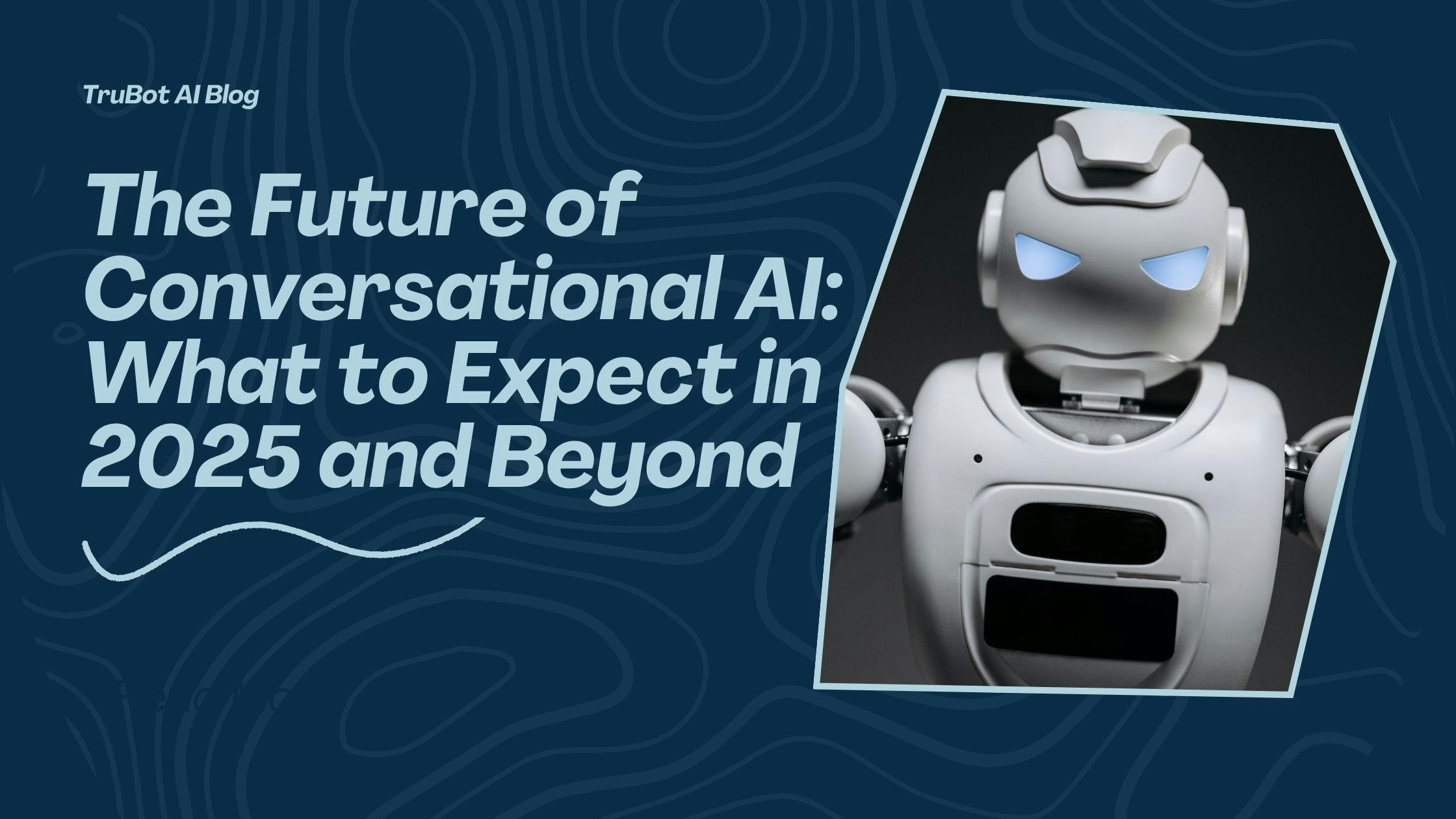
The Future of Conversational AI: What to Expect in 2025 and Beyond
Explore the future of conversational AI in 2025 and beyond, from smarter chatbots to voice AI and real-time personalization. See the trends shaping next-gen customer experiences.
Introduction
Conversational AI is rapidly transforming the way we interact with technology, reshaping industries from customer service to healthcare and beyond.
As we approach 2025, advancements in natural language processing, machine learning, and voice recognition are setting the stage for smarter, more intuitive, and deeply personalized AI experiences.
In this blog post, we’ll explore the most exciting trends and groundbreaking innovations poised to define the future of conversational AI, offering insights into how these developments will revolutionize communication, enhance user engagement, and unlock new possibilities for businesses and individuals alike.
Whether you’re a tech enthusiast, a business leader, or simply curious about the future of AI, this comprehensive guide will keep you informed and inspired about what lies ahead.
1. Natural Language Processing and Understanding
As we look toward 2025 and beyond, Natural Language Processing (NLP) and Understanding (NLU) stand at the forefront of conversational AI’s evolution. Recent innovations are pushing the boundaries of how machines comprehend, interpret, and generate human language, resulting in more natural, intuitive interactions.
One key trend is the development of increasingly sophisticated language models that not only process syntax and semantics but also grasp context, sentiment, and even subtle nuances like sarcasm or humor.
These models leverage vast datasets and advanced deep learning architectures, enabling AI systems to understand the intent behind user queries with remarkable accuracy.
Moreover, multimodal NLP is gaining traction, combining textual, auditory, and visual inputs to create a richer understanding of conversational context.
This means AI will be better equipped to interpret tone of voice, facial expressions, and even gestures, making interactions more human-like. Another exciting innovation is continual learning, where conversational AI systems adapt and evolve over time by learning from new interactions without extensive retraining.
This ensures that AI remains up-to-date with evolving language use, slang, and cultural references.
Finally, ethical NLP is becoming a priority. Efforts to reduce biases in language models and ensure respectful, inclusive communication are shaping the future of conversational AI, fostering trust and wider adoption.
Together, these advancements in NLP and NLU are set to transform how we engage with technology, making conversational AI an indispensable partner in daily life, work, and beyond.
2. The Rise of Multimodal Conversational AI
Looking towards 2025 and beyond, one of the most exciting trends in conversational AI is the rise of multimodal interactions. Unlike traditional AI systems that rely solely on text or voice, multimodal conversational AI integrates multiple forms of input and output-such as speech, text, images, gestures, and even facial expressions-to create more natural, dynamic, and context-aware user experiences.
This advancement allows users to communicate with AI in ways that closely mimic human interaction. For example, a user might ask a virtual assistant about a recipe while simultaneously showing an image of available ingredients, enabling the AI to provide tailored suggestions.
In customer service, multimodal AI can interpret not only spoken complaints but also visual cues from video calls, leading to faster and more empathetic resolutions.
The integration of computer vision, natural language processing, and sensor data is enabling these systems to better understand context and intent across different modes, making interactions more intuitive and efficient.
As hardware capabilities improve and data availability increases, we can expect multimodal conversational AI to become a standard feature in smart devices, healthcare applications, education, and beyond.
In essence, multimodal conversational AI is set to revolutionize how we engage with technology, breaking down barriers between humans and machines and paving the way for truly seamless communication in the near future.
3. Personalization and Contextual Awareness in AI Interactions
As conversational AI continues to evolve, personalization and contextual awareness are becoming key drivers in delivering more natural and effective interactions.
In 2025 and beyond, AI systems will move far beyond scripted responses, leveraging a deeper understanding of user preferences, behaviors, and contexts to tailor conversations in real time.
Personalization allows AI to adapt its tone, language style, and recommendations based on individual user profiles. For example, an AI assistant might remember your preferred shopping habits, favorite brands, or even your communication style, making every interaction feel more intuitive and human-like.
This shift not only enhances user satisfaction but also builds stronger, long-term relationships between brands and customers. Contextual awareness takes personalization a step further by enabling AI to understand the broader situation surrounding an interaction.
This includes recognizing the current environment, previous interactions, and even emotional cues. By integrating data from multiple sources-such as calendar events, location, and past conversations-conversational AI can anticipate needs and provide relevant assistance before you even ask.
Together, personalization and contextual awareness will redefine the way we engage with technology, making conversational AI an indispensable part of our daily lives. From customer service and healthcare to education and entertainment, these innovations will enable AI to deliver more meaningful, efficient, and empathetic experiences than ever before.
As these innovations continue to redefine how we communicate with technology, platforms like TruBot AI are leading the charge by helping businesses harness the full potential of conversational AI.
Whether you're looking to implement custom chatbots, voice assistants, or AI agents, TruBot AI offers market-validated, ready-to-deploy solutions that integrate seamlessly with your operations.
Try TruBot AI free for 30 days and experience firsthand how personalized, intelligent automation can enhance engagement, streamline processes, and future-proof your customer interactions.
4. Expansion of Conversational AI Across Industries
Conversational AI is rapidly expanding its footprint across a wide range of industries, fundamentally transforming how businesses interact with customers and streamline operations.
From healthcare to finance, retail to hospitality, conversational AI technologies like chatbots and virtual assistants are becoming vital tools for enhancing customer experience and driving efficiency.
In healthcare, conversational AI is being leveraged to provide 24/7 patient support, appointment scheduling, and even preliminary diagnostics, allowing medical professionals to focus more on critical tasks.
Financial institutions are utilizing AI-driven chatbots to offer personalized banking advice, fraud detection alerts, and seamless transaction assistance, enhancing both security and user convenience.
Retailers are implementing conversational agents to offer tailored shopping recommendations, manage inventory inquiries, and facilitate smooth customer service interactions, resulting in increased sales and customer loyalty.
The hospitality industry is embracing conversational AI to deliver personalized concierge services, streamline booking processes, and respond swiftly to guest inquiries, elevating overall satisfaction.
As natural language processing and machine learning algorithms continue to advance, these AI systems are becoming increasingly sophisticated, capable of understanding nuanced human emotions and context, enabling more meaningful and efficient conversations.
The cross-industry adoption of conversational AI not only enhances operational efficiency but also opens new avenues for innovation, creating smarter, more responsive, and customer-centric business ecosystems.
Keeping an eye on these developments is essential for organizations aiming to stay competitive in the evolving digital landscape.
5. Considerations and Privacy in Conversational AI
As conversational AI continues to advance and become more deeply integrated into our daily lives, considerations around privacy and data security have never been more critical. These AI systems often process vast amounts of personal and sensitive information to deliver personalized and seamless interactions.
Ensuring that this data is handled responsibly requires stringent privacy protocols, transparent data usage policies, and compliance with global regulations such as GDPR and CCPA.
Additionally, developers are increasingly exploring techniques like data anonymization, federated learning, and edge computing to minimize the exposure of personal data while maintaining high performance.
For users, understanding how their information is collected, stored, and shared is essential to building trust in conversational AI technologies.
Moving forward, striking the right balance between innovative AI capabilities and robust privacy safeguards will be a key factor in the widespread adoption and ethical deployment of conversational AI solutions.
6. Challenges and Opportunities for Conversational AI Development
As conversational AI continues to evolve and become an integral part of our daily lives, it faces a unique set of challenges and opportunities that will shape its development in 2025 and beyond.
One of the primary challenges lies in achieving truly natural and context-aware interactions. Despite significant advancements, many AI systems still struggle with understanding nuanced human emotions, ambiguous language, and complex conversational contexts.
Privacy and data security also remain critical concerns, as conversational AI systems require access to vast amounts of personal data to deliver personalized experiences, raising questions about user consent and data protection.
On the flip side, these challenges present exciting opportunities for innovation. Advances in natural language understanding (NLU), sentiment analysis, and multimodal communication are paving the way for more empathetic and intuitive AI assistants.
Additionally, the integration of conversational AI with emerging technologies such as augmented reality (AR), virtual reality (VR), and Internet of Things (IoT) devices promises to create richer, more immersive user experiences.
As businesses increasingly recognize the value of conversational AI in enhancing customer service, streamlining operations, and driving engagement, investments in research and development are accelerating.
The future of conversational AI is bright, dynamic, and full of transformative potential. As we move beyond 2025, advancements in NLP, multimodal capabilities, personalization, and cross-industry adoption will push conversational systems far beyond simple chat interfaces into deeply integrated, emotionally intelligent tools.
However, this future also demands a thoughtful approach-balancing innovation with privacy, user trust, and ethical design. Businesses, developers, and users alike must stay informed and intentional as AI continues to evolve.
Ultimately, those who embrace these changes now-leveraging smart tools like TruBot AI-will be better positioned to thrive in a world where conversational AI isn't just a feature, but a foundational layer of how we live, work, and connect.